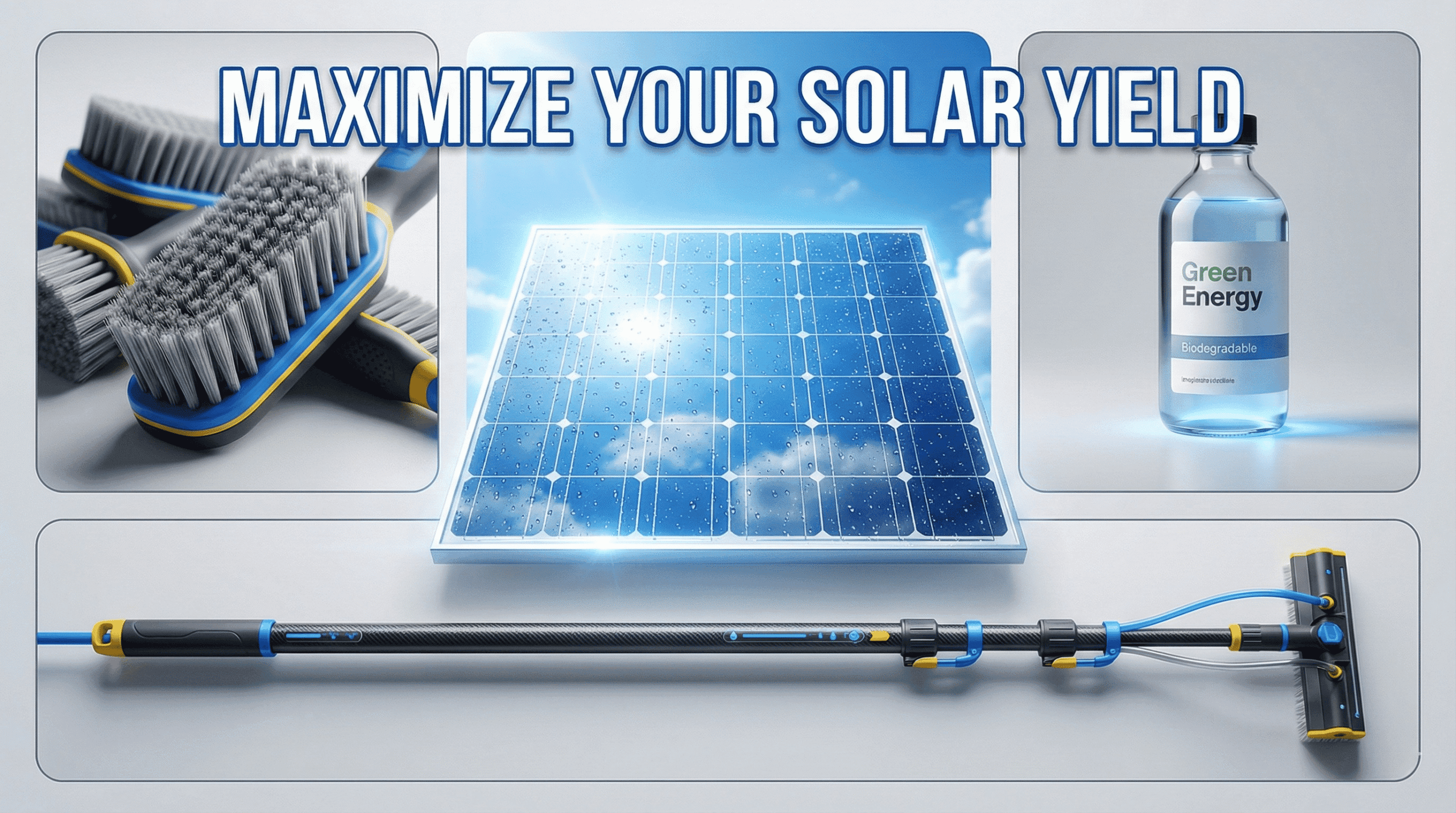
Last summer, I nearly went broke because I didn’t own a solar panel cleaning kit. I watched my energy bill creep up despite the blazing July sun. I figured the inverter was dying. Nope. After climbing onto the roof, I found the culprit: a thick, grey layer of ash and bird droppings caked onto my LG NeON 2 modules.
It looked like a desert wasteland up there. I grabbed a garden hose and a kitchen sponge, thinking I’d fix it in ten minutes. Big mistake. I left massive streaks, and the hard water from my tap turned into white mineral crust. That’s when I realized a real solar panel cleaning kit isn’t a luxury—it’s a financial necessity.
Why Your Efficiency Is Tanking Right Now
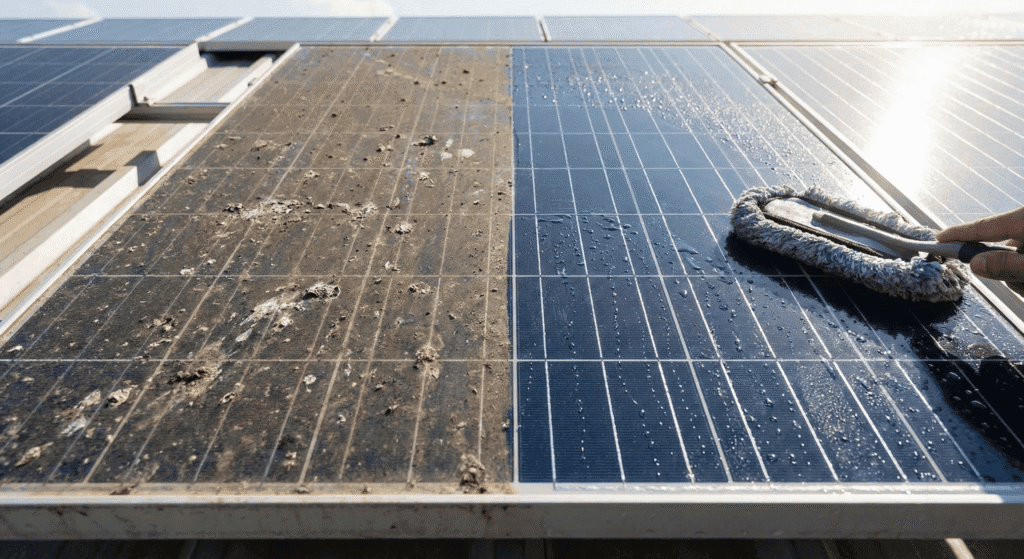
You might think rain does the job for you. It doesn’t. In fact, light rain often acts like a glue, mixing with dust to create a muddy “soiling” layer. Studies in semi-arid regions show that dust alone can slash your power output by up to 40%. Without a proper solar panel cleaning kit, that is a massive chunk of money flying out the window every month.
Why? Because those photovoltaic cells are hungry for photons. When a layer of grime blocks the light, the cells can’t “see” the sun. Plus, uneven dirt buildup causes “hot spots.” These are areas where cells get too hot because they’re struggling to process energy, which can permanently fry your expensive panels.
The 3 Must-Have Tools in a Professional Solar Panel Cleaning Kit
Don’t just buy the cheapest plastic mop at the hardware store. A high-quality solar panel cleaning kit needs specific engineering to protect the anti-reflective coating on your glass.
1. The Telescopic Water-Fed Pole
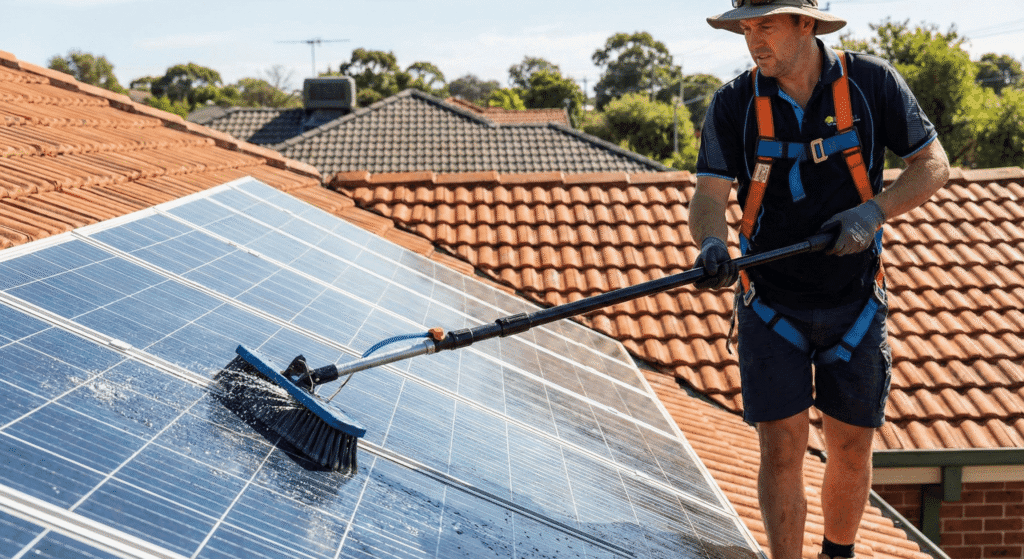
If you’re still balancing on a ladder with a bucket, stop. It’s dangerous. A professional-grade solar panel cleaning kit like the Kenbrook 6M or the Unger n-Lite system uses carbon fiber or lightweight aluminum poles. These poles have internal tubes that carry water directly to the brush head. This keeps the surface lubricated, so you aren’t just dragging dry dirt across the glass.
2. Soft-Bristle Nylon Brushes
Your panels aren’t a kitchen floor. They have delicate coatings that help them absorb more light. A standard broom will scratch that coating into oblivion. You need specialized nylon bristles-usually around 0.32mm thick-that are soft enough to preserve the glass but stiff enough to kick off stubborn bird droppings.
3. Deionization (DI) Filters or Purified Water Systems
Tap water is the enemy. It contains calcium and magnesium. When that water evaporates on a hot panel, it leaves behind “hard water spots.” These spots act like tiny mirrors, reflecting sunlight away from the cells. The best solar panel cleaning kit setups include a small DI resin filter that strips minerals from the water, ensuring a streak-free finish.
How to Clean Your Panels Without Breaking Them
I’ve seen neighbors use pressure washers on their arrays. Don’t do that. The high pressure can crack the glass or penetrate the seals, leading to internal corrosion that voids your warranty immediately.
The Golden Rule: Only clean in the early morning or late evening.
Why? Because when cold water hits a panel that’s been baking in the 2:00 PM sun, the glass can suffer from “thermal shock” and shatter. And honestly, standing on a roof in the midday heat is a nightmare anyway.
Is a Manual or Automatic Solar Panel Cleaning Kit Better?
For most homeowners in India, a manual solar panel cleaning kit with a 4-meter to 9-meter pole is the sweet spot. It’s affordable and effective. However, if you have a massive commercial array or live in a high-pollen area near farmland, you might look at robotic systems or fixed sprinkler nozzles.
| Kit Type | Best For | Approx. Price (INR) |
| Manual Brush & Pole | Small Residential | ₹4,200 – ₹12,500 |
| Water-Fed System | Large Residential / Two-Story | ₹16,500 – ₹50,000 |
| Robotic/Automatic | Commercial Farms | ₹1,65,000+ |
Avoid These 3 “Pro” Mistakes
- Using Dawn Dish Soap: While it’s great for ducks, it can leave a thin, oily film on your panels that actually attracts more dust. If your solar panel cleaning kit didn’t come with soap, stick to specialized, pH-neutral solar cleaners like Cleantite or just plain purified water.
- Abrasive Scrubber Pads: Never use steel wool or “magic erasers.” If a bird dropping won’t budge, let it soak under a wet microfiber cloth for five minutes.
- Leaning on the Glass: Never walk on your panels. Even if they don’t crack, your body weight can cause “micro-cracks” in the silicon cells that you can’t see with the naked eye.
Maintaining Your Investment
Check your monitoring app once a week. If you see your peak output dropping on cloudless days, it’s time to break out the solar panel cleaning kit. Most experts recommend a deep clean every 3 to 6 months, depending on how many birds live nearby. Using a high-quality solar panel cleaning kit ensures you don’t have to climb the roof more often than necessary.
So, are you going to keep letting your energy profits wash away in the dust, or are you ready to take control of your efficiency?
For more technical specs on inverter maintenance, check out Wikipedia’s guide on Photovoltaics. You can also look into internal resources regarding energy efficiency auditing.
on our site.
Check out our guide on 5 Proven Strategies for Depreciation on Solar Panels (2026 Update)