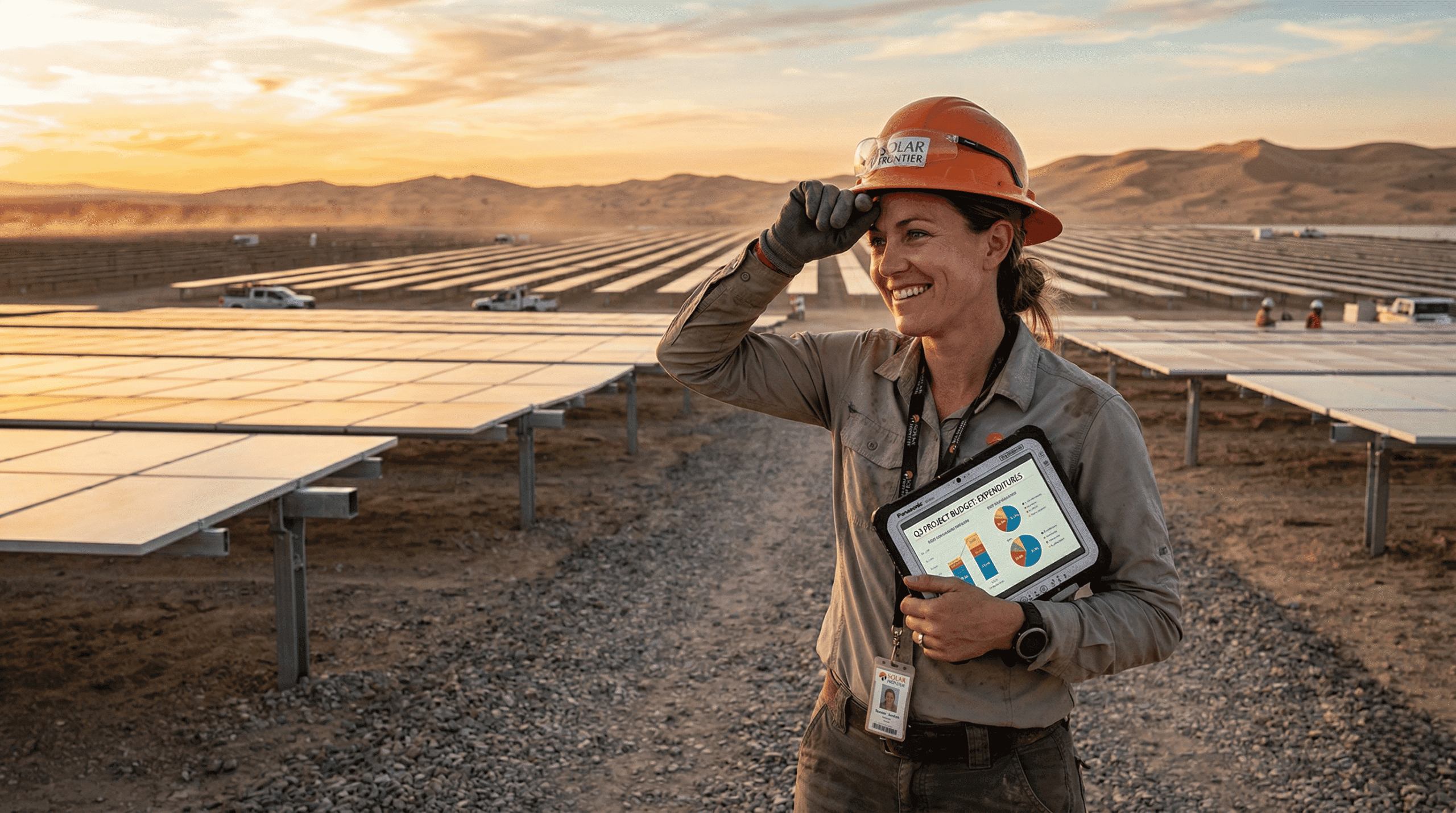
The wind howling across the El Dorado Valley near Boulder City ripped the blueprints right out of my hands. We were staring at a 50-megawatt dirt patch. A graveyard of blown budgets. Our initial projections were a complete joke.
Why? Because spreadsheets lie. The actual Solar power plant cost doesn’t care about your pristine Excel models. It feels like chewing glass while bleeding cash. We completely missed the hidden interconnection tariffs.
And the EPC contractor just smiled. They knew.
The Brutal Reality of Solar power plant cost Breakdown
Let’s talk hardware. Panels aren’t the biggest variable anymore.
You buy First Solar Series 6 modules. You think you locked in an absolute bargain. But then freight rates from Southeast Asia triple overnight. Suddenly, your procurement sheet is hemorrhaging money.
A massive oversight.
Racking systems introduce another nightmare. We opted for Nextracker TrueCapture single-axis trackers to chase better yield. The raw steel tonnage alone broke our logistics budget. We had truckloads of torque tubes stranded at the port.
This specific material delay inflated the baseline Solar power plant cost wildly. You cannot install glass if the skeleton isn’t built.
How Inverter Selection Swings Your Solar power plant cost
Central versus string inverters. The oldest fight in the utility-scale playbook.
We went with massive SMA Sunny Central UP units. The upfront capital expenditure looked incredibly solid. But the concrete pads required for these beasts? Astronomically expensive.
Pouring concrete in the Nevada desert summer. A logistical nightmare. The curing process failed twice due to the extreme heat. That specific Solar power plant cost overrun almost got me permanently fired.
String inverters require more complex wiring. But they fail in isolation. When a central inverter trips, you lose blocks of generation instantly.
Land Acquisition and the “Dirt Tax”
You find flat land. You think it’s cheap. It never is.
Geotechnical reports will absolutely break your heart. We hit solid caliche rock just two feet down below the topsoil. Driving standard piles became physically impossible.
Pre-drilling holes. For eighty thousand steel posts.
The labor hours exploded exponentially. Our carefully planned Solar power plant cost effectively doubled in the civil works category. We had to rent specialized rock-drilling rigs imported straight from Texas.
And the dust mitigation requirements from the county were brutal. We sprayed thousands of gallons of water just to keep the dirt from choking the highway.
The Interconnection Queue Purgatory
Generating power is the easy part. Shoving it onto the grid is where dreams die.
We applied to the California Independent System Operator (CAISO) queue. The cluster study dragged on for three excruciating years. Network upgrade fees hit us like an unbraked freight train.
Seven million dollars just for a local substation expansion. None of this was in the original prospectus.
You must factor in the host utility’s incompetence. They move at the speed of hardening tar. Your capital is tied up, aggressively bleeding interest while you wait for their engineers.
Soft Costs That Bleed the Solar power plant cost Dry
Lawyers charge by the billable hour. Environmental impact reports require literal armies of consultants.
We had to aggressively protect the local desert tortoise population. Fencing the entire perimeter with specialized exclusion barriers cost an absolute fortune. Biologists had to walk ahead of the bulldozers.
Every single day.
Insurance premiums have skyrocketed. Wildfire risk and freak hail storms make underwriters sweat profusely. Securing a builder’s risk policy added a hefty six-figure line item to our final Solar power plant cost.
According to the rigorous baseline models published by the National Renewable Energy Laboratory (NREL), hardware only accounts for roughly a third of the total expenditure. The rest is buried in these invisible administrative layers.
7 Secrets Behind the 10kw solar system price in india (Massive Savings) – guftugu.in
The Tax Equity Maze
You desperately need the Investment Tax Credit (ITC). Without it, the math immediately falls apart.
Navigating the Inflation Reduction Act bonus adders requires forensic accounting. Domestic content requirements are incredibly strict. Sourcing US-made steel for the racking was a brutal scavenger hunt.
We found a viable supplier in Ohio. But their lead time was forty weeks.
Delaying the Commercial Operation Date (COD) triggers vicious liquidated damages. The utility penalizes you heavily for every day you are late delivering power. We barely scraped by using an expensive bridging loan to float the Solar power plant cost temporarily.
Supply Chain Nightmares and Tariffs
Geopolitics will ruin your spreadsheet.
Anti-dumping and countervailing duties (AD/CVD) act like sudden death for utility-scale budgets. We had containers seized abruptly by Customs and Border Protection. They demanded proof that the metallurgical grade silicon wasn’t sourced from restricted global regions.
Proving provenance across a twelve-tier supply chain is agonizing work.
The trade group Solar Energy Industries Association (SEIA) tracks these agonizing supply chain bottlenecks relentlessly. Those stranded assets sat in a Los Angeles port racking up daily demurrage fees. Hundreds of dollars a day per locked container.
This arbitrary penalty artificially bloated our baseline Solar power plant cost beyond recognition.
Labor Rates and the Prevailing Wage Trap
To get the full federal tax credits, you must pay prevailing wages.
Union labor in the middle of nowhere demands heavy per diems. We had to build a temporary man-camp on site. Housing, feeding, and transporting three hundred electricians is a profound logistical nightmare.
It heavily resembles a military deployment.
Apprenticeship requirements add another thick layer of friction. Finding certified journeymen willing to work in 115-degree heat is incredibly tough. The required overtime pay was a staggering blow to our projected Solar power plant cost.
The Battery Energy Storage Surcharge
Standalone solar is practically dead in major utility markets. You absolutely need storage.
Adding a Battery Energy Storage System (BESS) radically alters the financial math. We integrated a 20-megawatt lithium-ion phosphate facility into the grid. Sourcing the Tesla Megapacks felt like bidding aggressively for rare art.
The chemical fire suppression systems alone required custom engineering.
Lithium commodity pricing swings wildly. A slight dip in global supply chains spikes your attached Solar power plant cost immediately. You are entirely at the mercy of international mining output constraints.
The Data Acquisition System (DAS) Illusion
You need robust software to monitor this massive glass farm.
SCADA systems are notoriously finicky. We hired a boutique tech firm to integrate the meteorological stations with the tracker controls. The communication protocols clashed instantly upon boot.
Fiber optic cables got accidentally severed during the trenching backfill.
Troubleshooting a ground fault across two thousand acres is deeply miserable work. The technicians charged emergency weekend call-out rates. This specific technological headache severely impacted our commissioning-phase Solar power plant cost.
Bifacial Modules and the Albedo Gamble
Everyone wants the backside energy boost. Bifacial panels loudly promise a higher yield.
But estimating that extra production is pure witchcraft. It depends entirely on the albedo—the physical reflectivity of the ground. We dumped thousands of dollars into crushed white gravel to artificially boost the light bounce.
It completely washed away during the first seasonal flash flood.
The premium paid for the bifacial glass wasn’t yielding the mathematically promised returns. Our Levelized Cost of Energy (LCOE) models crumbled. The anticipated efficiency gains failed entirely to offset the initial Solar power plant cost spike.
Fencing and Security Nightmares
Copper theft is a relentless, exhausting plague.
Organized rings will cut quickly through chain link and strip your grounding wires in minutes. We had to rapidly upgrade to heavy-duty welded wire mesh. Then we reluctantly installed thermal cameras on thirty-foot galvanized poles.
The perimeter security budget ballooned overnight.
It is definitely not just a one-time capital expense. Paying for a 24/7 remote operations center to actively monitor those camera feeds is a persistent, heavy drain. This chronic security overhead silently eats away at your long-term Solar power plant cost.
Operations and Maintenance (O&M) Realities
Construction finally finishes. You pop the warm champagne. Then the real bills start arriving.
Dust accumulation aggressively destroys your output. Washing hundreds of thousands of panels requires vast amounts of water. In a desert valley, water rights are fiercely protected by local governments.
We had to truck in reverse-osmosis water from fifty miles away.
Vegetation management is another silent financial killer. Weed abatement around the sensitive tracker bearings is strictly non-negotiable. Some developers successfully use sheep grazing, which is oddly effective.
But hungry sheep happily eat the lower wiring harnesses if you don’t secure them properly. Ask me exactly how I know. Replacing chewed string cables violently inflated our year-one operational Solar power plant cost.
The End of Life Decommissioning Bond
Counties aggressively demand a financial guarantee. They want absolute assurance you won’t abandon a rusted glass sea in thirty years.
Posting a massive surety bond upfront ties up vital corporate liquidity. The eventual salvage value of recycled silicon and aluminum barely offsets the heavy demolition labor.
Nobody ever talks about this final phase during the pitch meetings.
You can build the perfect financial model. You can secure the land and fight for the permits. But when the steel finally hits the dirt, the desert always extracts its toll. Are you truly prepared to write that blank check?