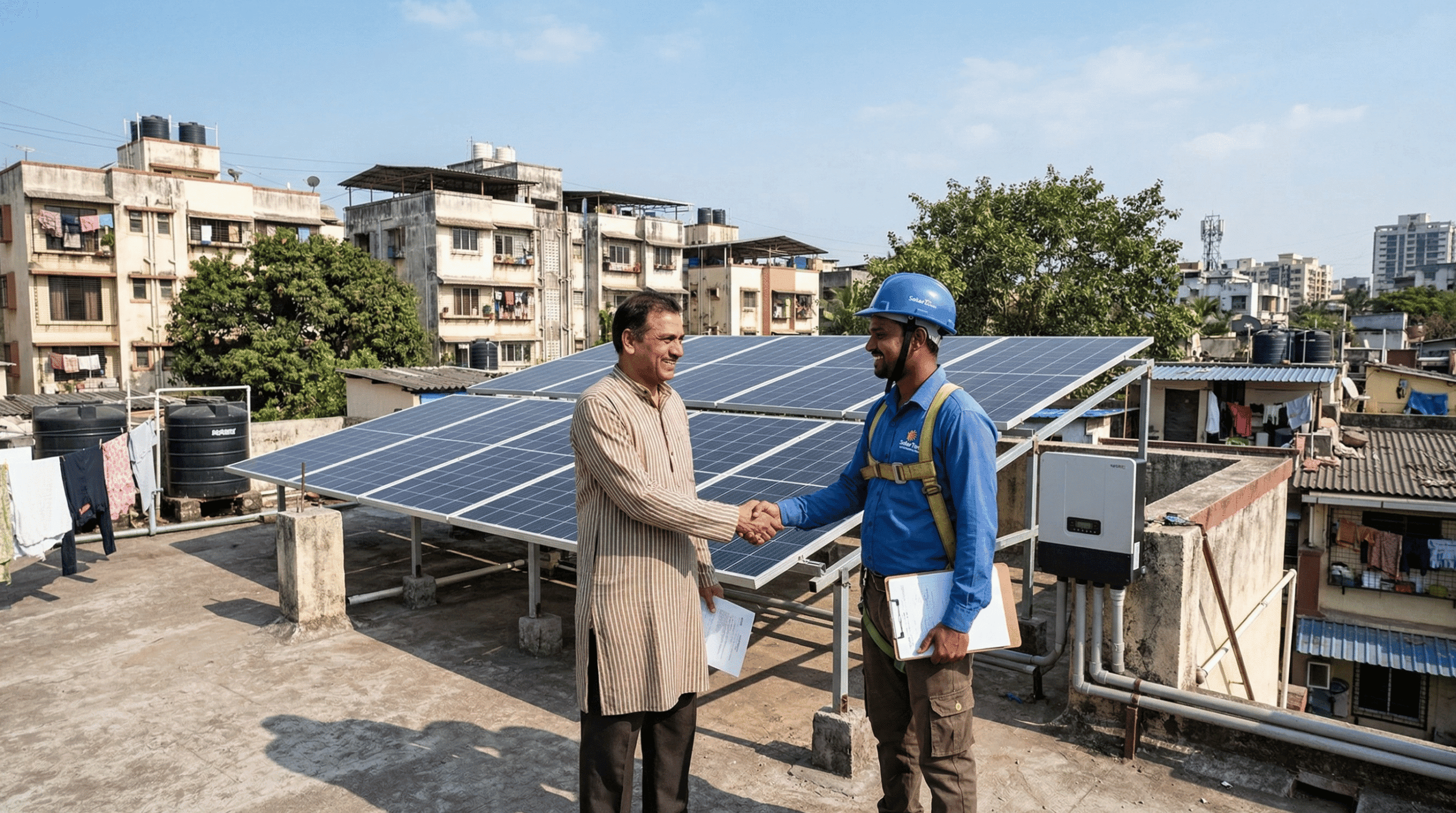
It started with an INR 14,350 electricity bill in the middle of a blistering May afternoon in Jodhpur, Rajasthan. My outdated air conditioner was groaning heavily under the relentless desert heat. My bank account felt like it was slowly bleeding out from a jagged papercut. That was the exact moment I stopped ignoring the massive metal rectangles baking on my neighbor’s roof.
But pinning down the genuine 10kw solar system price in india felt like navigating a dense maze blindfolded. Every local installer handed me a wildly different quotation. Some promised the moon. Others quoted numbers that sounded like a heavy down payment on a luxury sedan.
Why? Because the renewable energy market is severely fractured.
I decided to tear the entire quotation process apart piece by piece. I called wholesale distributors, interrogated weary electrical engineers, and scrutinized the Ministry of New and Renewable Energy (MNRE) guidelines until my eyes burned. What I uncovered was a deliberate fog meant to confuse ordinary, hard-working homeowners.
Let us rip the bandage off immediately. A standard setup will not cost you what the glowing highway billboard claims. You are looking at a base financial commitment ranging from ₹4,50,000 to over ₹8,50,000. And that massive gap hinges entirely on your battery choices and brand loyalty.
The Brutal Reality of the 10kw solar system price in india
So, where does the cash actually go? Most buyers assume the shiny glass panels devour the entire budget. False.
The glass is merely the outer shell. The true financial sinkholes are hidden deep inside the wiring, the conversion tech, and the bureaucratic red tape. Installers rarely break these invisible costs down for you.
They just hand you a lump sum and expect you to sign. I refused to do that.
Breaking Down the 10kw solar system price in india (Component by Component)
You need exactly 20 to 30 modules to hit that massive 10-kilowatt threshold. This depends heavily on whether you buy older 330W polycrystalline antiques or massive 580W TOPCon beasts. Brands like Waaree and Vikram Solar completely dominate the domestic market right now.
Picking top-tier domestic modules will drain about ₹3,00,000 from your pocket right out of the gate. Then comes the heartbeat of your micro-plant: the inverter. Do not skimp on this hardware.
If you slap a substandard inverter on your wall, your daily efficiency will violently choke. A sturdy Growatt or Fronius inverter will command roughly ₹1,00,000. It acts as the relentless traffic cop, converting raw DC sunlight into the smooth AC current your refrigerator desperately craves.
7 Solar panel app Secrets Uncovered (Insanely Profitable) – guftugu.in
How the PM Surya Ghar Subsidy Warps the 10kw solar system price in india
Government subsidies are the sweet carrot dangling in front of every Indian taxpayer. But the financial math is intensely rigid. You do not just get a massive blank check from the state.
Currently, the PM Surya Ghar Muft Bijli Yojana caps central financial assistance strictly based on system capacity. You get ₹30,000 per kW for the first 2kW. Then, you receive ₹18,000 for the third kilowatt.
After that? The government shuts the vault. You are entirely on your own for the remaining seven kilowatts.
The Subsidy Ceiling Everyone Ignores
That means your absolute maximum central subsidy is frozen at exactly ₹78,000. Period. Even though you are building a massive 10-kilowatt beast.
Sure, specific states like Uttar Pradesh or Delhi occasionally throw in an extra ₹30,000 state-level kicker. But do not expect the federal government to foot half your bill. The 10kw solar system price in india remains a heavy personal investment, even after the direct benefit transfer finally hits your bank account.
On-Grid vs. Off-Grid: Why the 10kw solar system price in india Fluctuates
Let us talk about the thick umbilical cord connecting your house to the local DISCOM. Your ongoing relationship with the local grid dictates your final invoice. An on-grid configuration is always the cheapest path forward.
You dump your excess daily power straight into the city lines. The meter spins backward. You skip the heavy batteries entirely.
This keeps the overall 10kw solar system price in india hovering near that manageable ₹4,80,000 mark after state subsidies. But what if your neighborhood suffers from chronic, unpredictable blackouts?
An on-grid setup automatically shuts down during a power outage to protect vulnerable linemen working on the wires. That is a bitter pill to swallow when the midday sun is roasting your roof. Your panels sit there, entirely dead.
Enter the off-grid behemoth. Here, you sever ties with the DISCOM completely and become your own utility company. But strict independence carries a brutal financial toll.
You will need a massive battery bank, often 10 to 15 towering lead-acid units or a highly advanced lithium-ion rack. Because of this heavy storage demand, the 10kw solar system price in india for an off-grid setup easily catapults past ₹7,50,000.
The Hybrid Compromise: Doubling Your Financial Risk
What if you demand a constant grid connection but also insist on heavy battery backup? You buy a complex hybrid setup. It is the absolute most expensive route available to residential buyers.
You are paying for a highly sophisticated bidirectional inverter plus massive lithium batteries. Expect the hybrid 10kw solar system price in india to touch an eye-watering ₹8,50,000.
It offers total peace of mind during cyclonic storms. But your return on investment timeline painfully stretches out to seven or eight long years.
The Hidden Surcharges Vendors Pray You Overlook
Shady installers love to quote a bare-bones 10kw solar system price in india over the phone. They conveniently leave out the heavy structural skeleton. If your roof is completely flat, you need elevated mounting structures crafted from hot-dip galvanized iron.
You need this specific angle to catch the optimal winter sun. That protective metal is incredibly heavy. It is also surprisingly expensive.
Expect to drop at least ₹50,000 just on the raw iron and heavy concrete ballast blocks. Then there is the complex DC cabling. Direct Current wires are substantially thicker and pricier than standard household copper.
If your shiny inverter is parked fifty feet away from your roof panels, that specific cabling cost multiplies rapidly. You are bleeding thousands of rupees per meter.
Will Your Roof Actually Survive the Weight?
Weighing down your aging concrete slab with thirty massive glass panels is no joke. A full installation adds hundreds of kilograms to your active structural load. I learned this the hard way when my lead installer in Jodhpur pointed out terrifying micro-fractures in my parapet wall.
We had to aggressively reinforce the entire southern edge before laying a single iron rail. If your home requires emergency structural reinforcement, the 10kw solar system price in india jumps again.
Civil masonry work is rarely included in the glossy initial brochure. Always demand a thorough structural audit before signing the final cheque. Paying an independent civil engineer ₹5,000 today easily prevents a catastrophic roof collapse during the next heavy monsoon.
DCR Modules and the Rigid ALMM Trap
If you want to claim that ₹78,000 government subsidy, your hands are completely tied. You cannot buy cheap, aggressively discounted imported Chinese panels. You are legally forced to use strict Domestic Content Requirement (DCR) modules.
These are solar cells and glass modules manufactured entirely within Indian borders. Because domestic manufacturing capacity is still aggressively scaling up, DCR panels naturally command a noticeable premium.
This specific mandate directly inflates the base 10kw solar system price in india. Is it highly patriotic? Yes.
Is it slightly harder on your wallet upfront? Absolutely. To verify global module pricing metrics and domestic constraints, inspect the public data at high-authority resources like BloombergNEF.
The Microscopic Warranty Illusion
Every enthusiastic salesman brags endlessly about their 25-year performance warranty. Read the microscopic print at the absolute bottom of the contract page. That specific warranty only guarantees the panels will produce 80% of their original output two decades from now.
It strictly does not cover the expensive manual labor to climb up there and physically swap the broken glass. And if your grid-tied inverter fries after year five? You are buying a brand new one straight out of your own pocket.
Always factor these inevitable replacement costs into your long-term financial math. The raw 10kw solar system price in india is merely the harsh entry fee to a decades-long commitment.
Net Metering Nightmares and Sluggish Bureaucracy
Getting the physical hardware bolted securely to your roof is only half the battle. The real, exhausting war begins at the local government electricity office. You must aggressively apply for a state-sanctioned net meter.
This little bi-directional device accurately tracks exactly how much power you feed back to the sprawling city grid. Until that specific meter is legally installed, your system cannot push a single watt of power outward.
And local DISCOMs are notoriously, painfully sluggish. Some frustrated homeowners wait agonizing months. They stare bitterly at their shiny new panels, entirely useless, while still paying full premium price for dirty grid power.
Add “bureaucratic bribery or endless patience” to your mental calculation of the 10kw solar system price in india. You can review exact net metering policies on the official MNRE portal.
The Generation Reality: What Does 10 Kilowatts Actually Do?
A 10kW setup is a massive, sprawling power plant. It is absolutely not for a tiny urban 2BHK apartment. This is heavy-duty energy infrastructure meant for sprawling suburban villas, small medical clinics, or massive multi-story joint family homes.
On a clear, fiercely cloudless day, this rig will pump out roughly 40 to 45 units (kWh) of raw electricity. Over a standard month, that translates to about 1,200 total units.
If your local DISCOM currently charges ₹8 per unit, you are wiping out nearly ₹9,600 from your painful monthly expenses. That aggressive, relentless savings rate is exactly why the high initial 10kw solar system price in india still makes fierce economic sense.
Your overall payback period rapidly shrinks to barely 4 or 5 short years. After that specific date, the rooftop energy is entirely free.
The Maintenance Myth You Were Eagerly Sold
“Install it once and forget it completely.” That is the absolute biggest lie actively peddled in the renewable energy market. Dust is the silent, suffocating enemy of panel efficiency.
In dry, arid Indian regions, a thick brown layer of topsoil heavily coats the glass within mere days. If you do not scrub those panels with soft, mineral-free water every two weeks, your daily generation drops by a staggering 15%.
Suddenly, the strict financial math justifying your heavy 10kw solar system price in india falls completely apart. You either nervously climb up there with a wet squeegee yourself, or you pay a local neighborhood boy ₹500 a month to do it. Add that recurring fee to the ongoing operational cost.
Shadows Will Destroy Your Massive Investment
Do you have a massive plastic water tank squatting on your roof? A towering, ancient neem tree leaning over from next door? Even a remarkably small shadow falling across a single lower panel can instantly throttle the entire electrical string.
Your massive, expensive investment suddenly performs like a cheap, tiny 3kW setup. Do not lock in a heavy 10kw solar system price in india until you carefully track the harsh sun’s path across your roof for a full 12 hours.
The government subsidies will absolutely not last forever. As nationwide adoption rates inevitably skyrocket, the MNRE will eventually pull the financial safety net away entirely.
The real question is not whether you can scrape together the cash to put these shiny panels on your roof today. The real question is: how many more scorching, unbearable Indian summers are you willing to personally fund your local DISCOM’s profit margins before you finally cut the cord?