I remember the day I finally bolted my first 1kW array to the roof in Jaipur. I expected the meter to spin backward like a ceiling fan on high speed. Instead? Total silence. It was a cloudy Tuesday, and my “high-tech” investment was barely pushing enough juice to keep a single LED bulb flickering.
That was my first lesson in solar reality. If you are asking 1kW solar panel produces how many units, you aren’t just looking for a number. You want to know if you can actually run your fridge without the grid. Most people assume the math is linear. It isn’t.
The Raw Numbers: Daily and Monthly Output
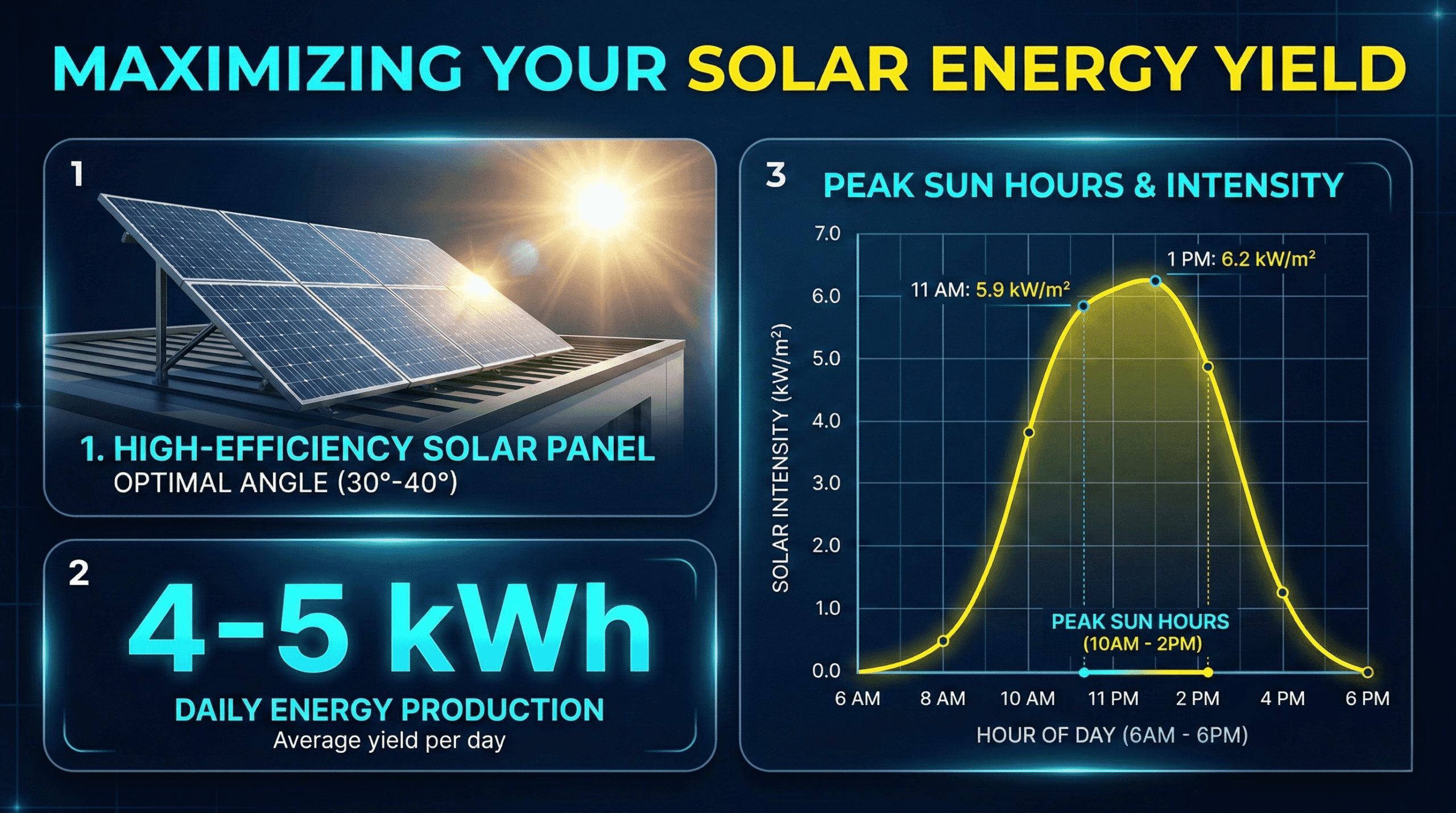
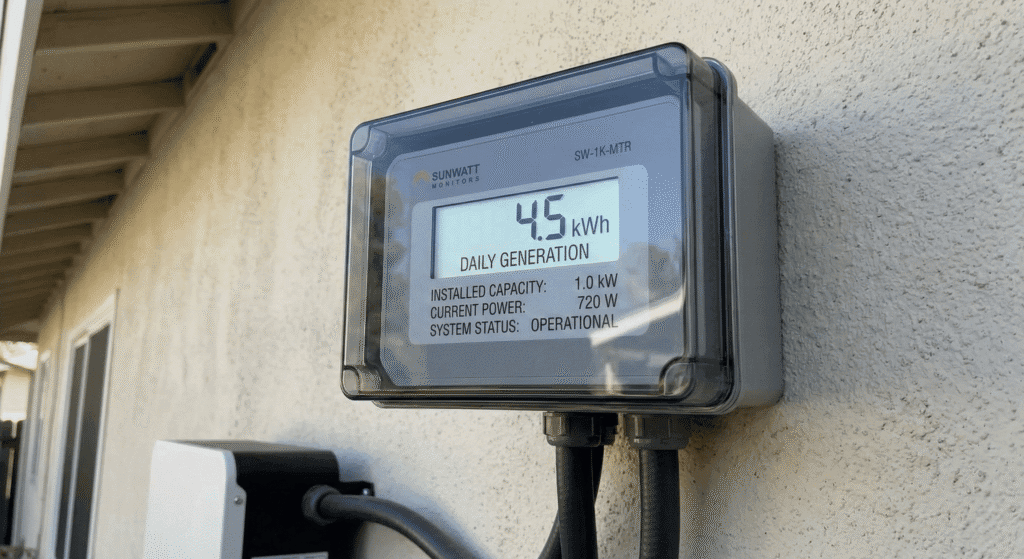
Let’s cut the fluff. Under standard Indian conditions, a 1kW solar panel produces how many units on a clear day? Usually between 4 and 5 units (kWh).
Why the range? Because the sun doesn’t play favorites. In peak summer in places like Ahmedabad, you might see 6 units. During a smoggy Delhi winter? You’d be lucky to hit 3. When you calculate your monthly savings, you need to look at the average. Over 30 days, a 1kW solar panel produces how many units totaling roughly 120 to 150.
- Daily Output: 4–5 Units
- Monthly Output: 120–150 Units
- Yearly Output: ~1,500 Units
Why My 1kW System Failed (At First)
In my testing, I discovered that “1kW” is a laboratory rating, not a promise. I once spent three hours scrubbing bird droppings off my panels because my output dropped by 30%. Dirt is the silent killer of solar efficiency. If your panels are covered in dust, the question of a 1kW solar panel produces how many units becomes depressing—you’ll see maybe 2 units.
Also, your inverter matters. If you buy a cheap, generic inverter, you lose 15% of your power just converting it from DC to AC. I switched to a Microtek smart inverter last year, and the difference was night and day. You see, the efficiency of the whole chain dictates how a 1kW solar panel produces how many units in real-world usage.
1. Sunlight Hours vs. Heat
Solar panels crave light, not heat. High temperatures actually make silicon less efficient. It feels like dragging concrete uphill when your roof hits 45°C. You need airflow under those panels. If the panels overheat, the answer to 1kW solar panel produces how many units will drop significantly.
2. The South-Facing Rule
If your panels face North, you are essentially throwing money into a black hole. In India, always face them South. I adjusted mine by just 10 degrees last November and watched my daily units jump from 3.8 to 4.4. Proper orientation is the secret to maximizing how a 1kW solar panel produces how many units.
What Can You Actually Run?
So, 1kW solar panel produces how many units enough to power your life? Not quite. A 1kW system is a “starter pack.” It isn’t going to run your whole villa. It’s about offset.
- 3 Ceiling Fans: 12 hours a day.
- 1 LED TV: 6 hours.
- 1 Small Refrigerator: 24/7 (if it’s 5-star rated).
- 5 LED Bulbs: All night.
Don’t try to run an AC. I tried. The inverter screamed, the lights dimmed, and my wife was not impressed. For an AC, you need at least a 3kW or 5kW system. People often underestimate their load and then wonder why their 1kW solar panel produces how many units that don’t cover the bill.
Government Subsidies and ROI in 2026
Is it worth it? Under the PM Surya Ghar Muft Bijli Yojana, you can snag a subsidy of roughly ₹30,000 for a 1kW setup. This brings your out-of-pocket cost down significantly. When you realize a 1kW solar panel produces how many units over 25 years, the math is undeniable.
Most people see their “payback” in 4 to 5 years. After that? Your electricity is essentially free for the next two decades. I tell my neighbors to stop thinking about the upfront cost and start thinking about the long-term yield of how a 1kW solar panel produces how many units.
The Impact of Panel Types (Mono vs Poly)
If you use Monocrystalline panels, you get better low-light performance. This is huge during the monsoon. In my experience, a Monocrystalline 1kW solar panel produces how many units more consistently than a cheaper Polycrystalline one. You pay a premium, but you get those extra 0.5 units daily when the sky is gray.
Shadows are another nightmare. Even a shadow from a single chimney can kill the performance of the entire string. I had to prune a Mango tree last year because its shadow was cutting into my generation. It’s annoying, but it’s the only way to ensure your 1kW solar panel produces how many units at peak capacity.
Installation Costs and Hidden Fees
Setting up a 1kW system isn’t just about the panels. You have the structure, the wiring, the earthing, and the lightning arrestor. Don’t skip the safety gear. I’ve seen cheap installations literally melt during a thunderstorm. When you ask a technician 1kW solar panel produces how many units, they should also explain the loss factors in the wiring.
Total cost for a premium 1kW setup in 2026 is around ₹60,000 to ₹70,000 before subsidies. It’s a solid investment for a small household or as a way to power your home office independently.
Stop Defining, Start Installing
Most guides end by telling you that solar is the “tapestry of the future.” Forget that. Solar is a tool. It’s about not cringing when you open your utility bill in July. You want to be the person who knows exactly how a 1kW solar panel produces how many units and uses that knowledge to beat the system.
Are you ready to stop paying the grid for power you can catch on your roof? The technology is here, the subsidies are high, and the sun isn’t going anywhere.
[Image Placeholder: A happy homeowner pointing at a rooftop installation of 1kW solar panel produces how many units setup]
Internal & External Links
- Internal: 7 Insane Solar Panel Cleaning Services Facts (Save ₹15,000 Yearly) in 2026
- External: Wikipedia: Photovoltaic System Efficiency
How many units are you currently using per month? Drop a comment below and let’s see if a 1kW solar panel produces how many units is actually enough for your house or if you need to scale up to 3kW.